
Hip Pain Physiotherapy
Acute | Sub-Acute | Chronic | Post-Operative Hip Rehabilitation
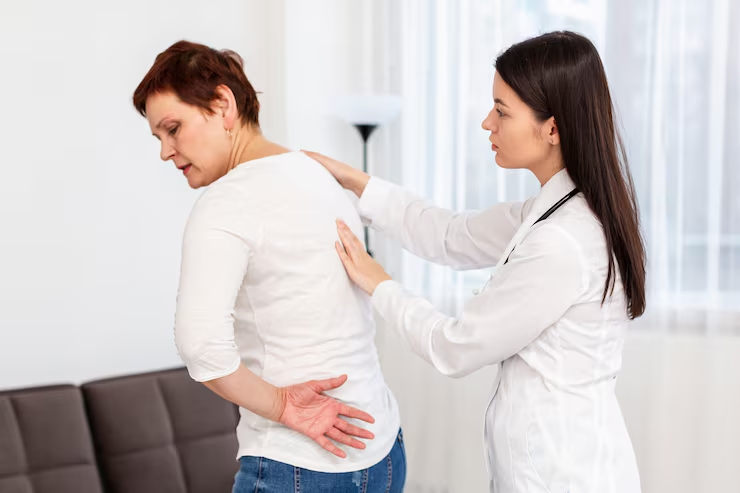
Hip pain affects standing, walking, sitting, bending, and overall mobility. At
Spectrum Physio, we follow a biomechanics-based approach, addressing hip–pelvis–spine interaction, soft tissue imbalances, gait abnormalities, muscle
firing patterns, and functional movement.
Common Hip Conditions Treated
- Hip flexor strain
- Gluteus medius/minimus strain
- Piriformis tightness & compression
- Trochanteric bursitis
- Iliotibial (IT) band tightness
- Femoroacetabular Impingement (FAI – CAM/Pincer)
- Hip labral tear
- Early & chronic osteoarthritis
- Sacroiliac (SI) joint dysfunction
- Hip pointer injuries
- Acute fall trauma
- Hamstring origin strain
- Trendelenburg gait / gluteal weakness
- Hip instability
- Sports hip injuries
Acute Hip Pain Treatment (0– 72 hours)
Common Causes
- Sudden muscle strain (hip flexors, glutes, hamstrings)
- Acute labral irritation
- Hip impingement flare-up
- Acute piriformis spasm
- Trochanteric bursa inflammation
- Fall/trauma injuries
- IT band acute tightness
- Ligament sprain
- Acute SI joint locking
Our Acute Treatment Approach
Immediate Pain & Inflammation Control
- Ice therapy / cryotherapy
- Electrotherapy (TENS/IFT/Ultrasound)
- Laser therapy for acute tissue healing
- Gentle compression if swelling exists
Biomechanics-Based Acute Assessment
- Pelvic tilts (anterior/posterior)
- Hip rotation abnormalities
- SI joint alignment
- Muscle guarding patterns
- Gait pattern changes
- Hip–knee–ankle chain mechanics
Soft Tissue & Fascia Treatment (Pain-Free)
- Gentle myofascial release
- Piriformis soft release
- Pain-free hip flexor/IT band relaxation
- Gluteal trigger point release
- Avoiding deep pressure in the first 48–72 hours
Acute Mobility Restoration
- Passive hip ROM
- Pain-free internal/external rotation
- Gentle joint distraction
- Pelvic tilt correction movements
Taping for Support
- Kinesio taping for
- Hip flexor spasm
- IT band irritation
- Trochanteric bursa unloading
- Rigid taping if ligament sprain
Acute Strength Conditioning (Very Gentle)
- Submaximal isometrics
- Gluteal activation (glute-med, glute-min)
- Core-bracing patterns
- Supported standing/walking training
Acute Red-Flag Screening
- Labral tear indicators
- Fracture signs after fall
- Severe impingement pain
- Radiating symptoms
Goal
Reduce pain, protect tissues, restore gentle hip motion, and prevent
compensatory patterns.
Sub-Acute Hip Pain Treatment (3 days – 6 weeks)
Common Causes
- Healing muscle strains
- Sub-acute hip impingement
- Piriformis tightness
- SI joint dysfunction
- Labral irritation (non-acute stage)
- Early osteoarthritis symptoms
- IT band overuse symptoms
- Trochanteric bursitis recovery stage
- Hip mobility restrictions
Our Sub-Acute Treatment Approach
Restore Hip–Pelvis Mechanics
- Pelvic alignment correction
- SI joint mobilization
- Hip capsule mobilizations (Grade I–III)
- Femoral head gliding/mechanical correction
- Gait retraining
Trigger Point & Fascia Release
- Piriformis deep release
- Hip flexor/iliacus MFR
- Glute medius & minimus trigger point therapy
- Hamstring origin tightness treatment
- IT band myofascial release
Improve Mobility
- Hip flexion/extension mobility
- Rotational ROM
- Capsule stretching
- Thomas stretch, piriformis stretch
- Foam rolling (as tolerated)
Sub-Acute Strengthening
- Glute medius/minimus strengthening
- Hip rotator control
- Core stabilization
- Closed-chain activation
- Pelvic stability exercises
- Beginning of dynamic balance training
Taping & Electrotherapy (as needed)
- Kinesio taping for glute activation
- Taping for bursa offloading
- Laser therapy for tissue healing
- IFT/US to reduce residual inflammation
Functional Activation
- Hip-hinge retraining
- Sit-to-stand mechanics
- Step-up and mini-squat training
- Low-load gait correction
Goal
Restore full mobility, eliminate tightness, activate gluteal stabilizers, and
correct pelvic mechanics.
Chronic Hip Pain Treatment (6+ weeks)
Common Causes
- Long-standing hip impingement (FAI)
- Labral tear (chronic)
- Early & moderate osteoarthritis
- Trochanteric bursitis (chronic)
- IT band tightness
- Gluteal weakness / Trendelenburg gait
- SI joint dysfunction
- Hip capsule stiffness
- Piriformis syndrome
- Chronic muscle imbalance
Our Chronic Treatment Approach
Complete Biomechanics Analysis
- Hip–pelvis–spine kinetic chain
- Leg length pattern
- Gait assessment
- Muscle firing sequencing
- Deep gluteal activation
- Trendelenburg gait correction
Advanced Manual Therapy
- Hip mobilizations (Grade III–V as indicated)
- Hip long-axis distraction
- Lateral gliding for impingement
- SI joint mobilization
- Deep MFR and trigger point therapy
- Piriformis and iliopsoas release
- IT band decompression techniques
Progressive Strengthening
- Glute med/min strengthening (key for bursitis, FAI, OA)
- Hip external rotator strengthening
- Core & pelvic control training
- Step-up/step-down mechanics
- Resistance band exercises
- Lower-limb kinetic chain strengthening
Functional Movement Training
- Balance & proprioception
- Squat mechanics
- Running mechanics (if athlete)
- Sports-specific retraining
- Lifting ergonomics
Pain Modulation
- Heat therapy
- Laser for chronic inflammation
- Ultrasound if required
- Intermittent electrotherapy
Goal
Build hip stability, restore joint mechanics, prevent recurrence, and return to
full activity/sport.
Post-Operative Hip Rehabilitation
Surgeries Covered
- Total Hip Replacement (THR)
- Hip arthroscopy
- Labrum repair
- FAI (CAM/Pincer) corrective surgery
- Bursitis surgery
- Fracture fixation
- Tendon repair
Phase-Wise Post-Op Treatment Approach
Phase 1: Immediate Post-Op (0–2 weeks)
- Pain & swelling control
- Cryotherapy
- Gentle mobility
- Assisted walking with aids
- Quadriceps & glute activation
- Breathing & circulation exercises
Phase 2: Early Strength Phase (2–6 weeks)
- Gradual ROM improvement
- Hip flexor/glute activation
- Weight-bearing progression
- Pelvic stability training
- Gait correction
- Gentle manual therapy
Phase 3: Intermediate Strength Phase (6–12 weeks
- Hip abductor strengthening
- Closed-chain training
- Balance & proprioception
- Step-up/down mechanics
- Functional movement retraining
Phase 4: Advanced Functional Training (3–6 months)
- Running/walking retraining
- Advanced strength & endurance
- Lunges, squats, hip hinge retraining
- Sport-specific training
- Return-to-work guidance
Goal of Post-Op Rehab
Restore joint function, build stability, regain full mobility, and achieve safe
return to daily life or sports.
Goal
Restore joint function, build stability, regain full mobility, and achieve safe
return to daily life or sports.