Shoulder Pain
Acute Shoulder Pain Treatment (0–72 Hours)
Acute shoulder pain is a common condition that appears suddenly—often due to a fall, sudden jerk, lifting injury, awkward sleeping posture, or sports trauma. During the first 72 hours, the joint is in the acute inflammatory phase, where swelling, sharp pain, and limited mobility are prominent. Immediate physiotherapy plays a crucial role in preventing long-term complications such as frozen shoulder, chronic pain, or recurrent injuries.
At Spectrum Physio Centre, our acute shoulder pain management focuses on rapid pain control, inflammation reduction, biomechanical correction, and safe early mobilisation to ensure fast healing.
Common Causes
- Muscle spasm
- Acute muscle or ligament strain
- Sudden injury during activities
- Fall or direct impact trauma
- Mild shoulder dislocation or subluxation
- Sudden jerky movements
- Poor sleeping or working posture
Treatment Glimpse – Acute Stage
Immediate Pain & Inflammation Control
Ice Therapy / Cryotherapy
- Cold therapy is essential during the acute phase. It:
- Reduces inflammation
- Controls swelling
- Numbs pain
- Protects soft tissues
- Applied at controlled intervals, it supports faster healing.
Electrotherapy (TENS / High Frequency Currents )
- Electrotherapy provides non-invasive pain relief.
- TENS blocks pain signals
- HFC reduces inflammation and improves circulation
- These modalities help reduce pain without medication.
Soft-Tissue Injury Management
In acute injuries, the shoulder muscles often enter protective spasm, and the surrounding tissues—including rotator cuff, deltoid, upper trapezius, and scapular stabilisers—become tight, tender, and overactive. The agonist and co-contracting muscles frequently develop trigger points, which restrict movement and increase pain.
At Spectrum Physio, we begin with a detailed biomechanics-based assessment to understand:
- Which muscles are in spasm
- Which structures are overloaded
- Which compensation patterns are activated
- How the scapula and shoulder rhythm is affected
Once identified, we work on
- Releasing spasms
- Relaxing tight muscles
- Trigger point therapy
- Myofascial release
- Fascial tissue mobilisation
To stabilise the area and reduce strain, we apply Kinesio Taping or rigid sports taping, which improves muscle activation, reduces swelling, and supports the joint without restricting motion.
For deeper inflammatory control, LASER therapy is used to accelerate tissue healing, reduce swelling, and improve microcirculation. This combined approach ensures fast recovery and prevents the injury from becoming chronic.
Gentle Joint Protection Techniques
- Protecting the shoulder from unnecessary movement is critical. We advise:
- Safe resting positions
- Avoiding overhead activities
- Avoiding heavy lifting
- Protecting the joint from sudden jerks
- Using arm support when necessary
- This prevents further structural damage.
Acute Mobility Restoration
- Movement is necessary—even in the acute stage—but must be gentle and pain-free. We start with
- Pendulum exercises
- Assisted movements
- Gradual ROM restoration
- This prevents stiffness and reduces the risk of frozen shoulder.
Pain-Free Passive Movements
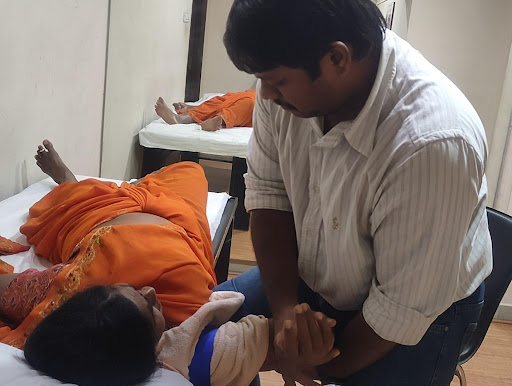
- Our therapists perform controlled passive movements to:
- Maintain joint lubrication
- Prevent adhesions
- Keep the capsule supple
- These movements are precise and carefully monitored to avoid irritation.
Acute Posture Correction
- Incorrect posture strains the shoulder further. We correct
- Forward head posture
- Rounded shoulders
- Incorrect sleeping posture
- Proper alignment significantly reduces pain during the acute phase.
Education on Do’s & Don’ts
- We guide you on
- What movements you must avoid
- How to sleep safely
- When to apply ice
- When not to use heat
- How to use the arm without aggravation
- Early home exercises to continue healing
- Education ensures healing continues even outside the clinic.
Goal
- Reduce pain
- Control inflammation
- Protect the shoulder joint
- Restore early mobility
- Prevent stiffness and frozen shoulder
- Prepare for strengthening phase
- Prepare for strengthening phase
- Correct management during the acute phase sets the foundation for complete rehabilitation.
Sub-Acute Shoulder Pain Treatment (3 Days – 6 Weeks)
Goal: Restore mobility, reduce muscle guarding, correct biomechanics, and initiate functional strengthening.
When the shoulder moves from the acute stage into the sub-acute phase, pain begins to reduce, but tissue healing is still in progress. During this time, patients commonly experience stiffness, restricted movement, muscle tightness, altered shoulder biomechanics, and weakness of stabilising muscles. This phase is crucial because improper management can lead to chronic shoulder pain, impingement, or long-term mobility loss.
At Spectrum Physio, we follow a structured, evidence-based protocol designed to normalise movement patterns, retrain the shoulder complex, and ensure complete recovery.
Treatment Glimpse – Sub-Acute Stage
Clinical Biomechanical Assessment
-
As pain subsides, the real cause of movement dysfunction becomes clearer.
We evaluate - As pain subsides, the real cause of movement dysfunction becomes clearer. We evaluate
- Glenohumeral joint mechanics
- Thoracic mobility and posture
- Soft-tissue tension patterns
- Agonist–antagonist muscle imbalance
- Stabiliser muscle activation (rotator cuff, serratus anterior & lower trapezius)
- This helps us identify why the shoulder is still restricted or painful.
Releasing Spasm, Tightness & Trigger Points
-
Post-injury, the surrounding muscles often remain in a protective spasm.
We typically find - Tightness in upper trapezius, levator scapulae, pectoralis major/minor
- Trigger points in supraspinatus, infraspinatus, deltoid
- Fascial adhesions due to reduced movement
- Our treatment includes
- Myofascial release
- Trigger point therapy
- Active release techniques
- Soft tissue mobilisation
- Muscle energy techniques
- This helps reduce pain, soften the tissue, and restore normal gliding of the shoulder structures.
Fascia & Mobility Restoration
In the sub-acute stage, fascia commonly becomes thick, sticky, and restrictive due to inflammation and reduced circulation.
We focus on:
- Fascial release
- Cross-hand techniques
- Shoulder girdle fascial mobility
- Pec and anterior chain fascial stretching
- Thoracic spine mobility mobilisation
- Restoring fascial mobility accelerates healing and improves the overall movement pattern.
Targeted Electrotherapy for Healing
Electrotherapy is now applied not for pain alone, but for repair and tissue regeneration.
We use:
- Laser therapy (LLLT) to stimulate collagen synthesis, reduce inflammation, and accelerate tendon healing
- Ultrasound therapy for tissue repair
- TENS/IFT if residual pain persists
- Combination therapy for stubborn trigger points
- Laser is especially helpful for rotator cuff inflammations, bursitis, and tendon healing.
Kinesio Taping or Rigid Taping
- Based on the condition, we apply taping to
- Support weak structures
- Reduce load on injured tissues
- Improve posture
- Facilitate or inhibit specific muscles
- Correct scapular alignment
- Kinesio Tape is used for muscle activation & pain reduction.
- Rigid Tape is used for structural support & biomechanical correction
Mobility Restoration & Guided Shoulder Movements
-
As pain reduces, improving movement becomes the priority.
We focus on - Passive & active-assisted ROM (flexion, abduction, rotation)
- Capsular mobility techniques
- Glenohumeral joint mobilisation (Grade I–III)
- Scapular mobility (protraction, retraction, upward rotation)
- Stick/wand mobility routines
- These restore smooth motion and prevent long-term stiffness.
Posture Correction & Movement Retraining
- Most shoulder problems worsen due to
- Forward head posture
- Rounded shoulders
- Thoracic kyphosis
- Poor scapular positioning
- We incorporate
- Thoracic extension exercises
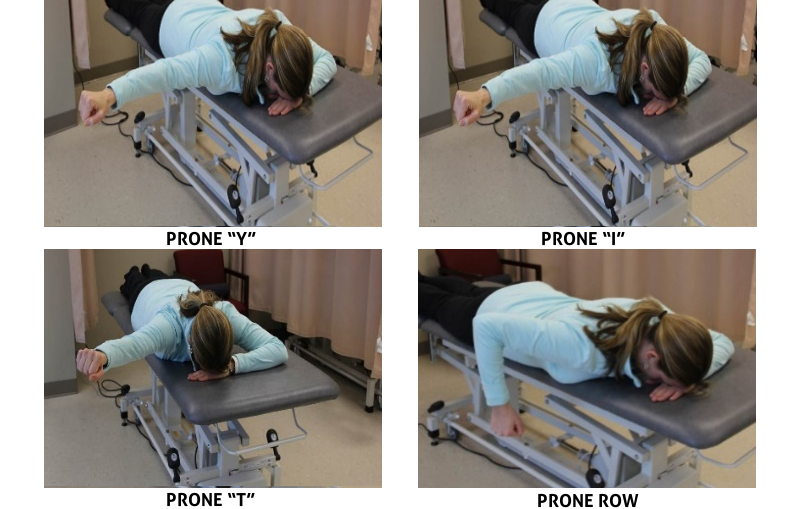
- Scapular stabilisation
- Chin tuck & posture cues
- Stretching of the front muscles and activation of the back muscles
- This restores healthy shoulder mechanics and prevents further strain
Progressive Strengthening – Rotator Cuff & Scapular Muscles
Sub-acute is the BEST time to start controlled strengthening.
We focus on:
- Rotator cuff
- Isometric internal & external rotation
- Theraband exercises
- Closed-chain stability drills
- Scapular stabilisers
- Serratus anterior activation (wall slides, punches)
- Lower trapezius strengthening
- Middle trapezius retraction
- Rhomboid activation
- Strengthening prevents the transition to chronic shoulder pain.
Functional Training for Daily Movements
As mobility improves, training becomes more functional and task-specific.
We train patients for
- Reaching overhead
- Lifting objects
- Dressing movements
- Behind-the-back movements
- Sports-specific drills if needed
- This ensures full readiness to return to daily activities.
Education, Do’s & Don’ts
- We guide patients on
- Safe shoulder use
- What movements to avoid
- Correct sleeping posture
- Ice vs. heat application
- Activity modification
- Home exercise program
- Education prevents reinjury.
Goal of Sub-Acute Stage
- Restore full mobility
- Increase blood flow and promote tissue healing
- Break muscle spasm and trigger points
- Correct biomechanics & posture
- Begin strengthening safely
- Prevent transition to chronic pain
- Prepare the shoulder for full-strength rehabilitation
Chronic Shoulder Pain Treatment (6 Weeks – Several Months)
Goal: Correct long-standing movement dysfunction, rebuild strength, restore full function, and prevent recurrence
Chronic shoulder pain develops when the injury has been present for more than 6 weeks, or when incorrect healing, muscle imbalance, or poor biomechanics persist over time. Patients in this stage typically experience deep aching pain, restricted mobility, weakness, recurrent flare-ups, impingement, instability, or tendon degeneration. Without structured rehabilitation, it can lead to frozen shoulder, rotator cuff tears, or long-term disability.
At Spectrum Physio, our chronic pain protocol focuses on advanced diagnostics, biomechanical correction, strength rebuilding, neuromuscular re-education, and long-term functional recovery.
Treatment Glimpse – Chronic Stage
Advanced Biomechanical & Functional Assessment
Chronic pain is rarely due to one single structure — it is a movement dysfunction problem.
We assess
- Scapular dyskinesis (abnormal movement patterns)
- Rotator cuff integrity
- Glenohumeral joint arthrokinematics
- Thoracic spine stiffness & rib mobility
- Agonist–antagonist muscle imbalance
- Fascial tension lines
- Overuse patterns in sports or work
- Strength deficiencies and compensations
This helps identify the root cause, whether it’s impingement, rotator cuff dysfunction, instability, bursitis, tendinopathy, or posture-related pain.
Deep Soft Tissue Release & Chronic Trigger Point Therapy
- Chronic cases show
- Long-standing spasms
- Irritated trigger points
- Fibrotic tissue buildup
- Myofascial adhesions
- Reduced tissue elasticity
- We apply
- Deep tissue mobilisation
- Myofascial release
- Trigger point dry needling (if indicated)
- Instrument-assisted soft tissue mobilisation (IASTM)
- Cross-friction therapy
- Contract–relax techniques
These techniques improve tissue quality and restore natural movement.
Fascial Re-Patterning & Mobility Restoration
Chronic pain creates restrictions in fascial chains that affect shoulder mechanics
- We apply
- Anterior chain fascial release (pecs, deltoid, biceps)
- Lateral line fascial release (upper traps, supraspinatus)
- Posterior chain mobility (infraspinatus, rhomboids)
- Thoracic fascia mobilisation
- Rib cage expansion & mobility drills
- This improves shoulder elevation, rotation, and overhead mobility.
Joint Mobilisation & Capsule Stretching
Long-standing shoulder issues often lead to capsular tightness, especially posterior and inferior capsule.
- We use
- Mobilisation (Grade II–IV) for stiff joints
- Capsule stretching for internal/external rotation deficits
- Thoracic spine mobilisation
- Scapulothoracic gliding techniques
- These restore normal joint play and reduce impingement symptoms.
Advanced Electrotherapy for Chronic Tissue Healing
In chronic conditions, electrotherapy focuses on regeneration, circulation, and reducing deep inflammation.
- We use
- Laser therapy to improve collagen repair and treat tendinopathy
- Ultrasound for chronic scar tissue
- Shockwave therapy (if needed) for tendon degeneration
- Combination therapy for stubborn pain
- Heat therapy to improve blood flow before exercise
- Laser is particularly beneficial for rotator cuff, long head of biceps tendon, and supraspinatus tendinopathy.
Mobility, Stretching & Range of Motion Training
- We focus on restoring full movement in all planes
- Overhead mobility
- Behind-the-back mobility
- Internal/external rotation
- Cross-body stretch
- Thoracic extension mobility
- Posterior capsule stretch
- Pectoral and latissimus stretching
- This is essential to eliminate long-standing stiffness and impingement.
Progressive Strengthening – Rotator Cuff & Scapular Stability
Weak stabilisers are the main cause of chronic shoulder dysfunction.
- Rotator Cuff Strengthening
- Theraband strengthening
- Side-lying external rotation
- Internal rotation strengthening
- Scapular plane elevation
- Closed-chain cuff stability drills
- Scapular Strengthening
- Serratus anterior activation
- Lower trapezius strengthening
- Rhomboid and middle trapezius retraction
- Scapular upward rotation drills
- Wall and floor-based scapular control exercises
This corrects movement and prevents reinjury.
Posture Correction & Ergonomic Training
Chronic shoulder pain is strongly linked to poor posture.
- We correct
- Rounded shoulders
- Forward head posture
- Thoracic flexion
- Desk-based poor ergonomics
- Includes
- Posture cue training
- Ergonomic correction for work/sports
- Strengthening for postural muscles
- Stretching of tight anterior muscles
This is essential for long-term pain relief.
Neuromuscular Re-Education
The brain adapts to chronic pain.
- We retrain correct movement patterns using
- Proprioceptive training
- Motor control drills
- Scapular rhythm retraining
- Hand-eye coordination drills (if sport related)
- Functional movement training
- This ensures the shoulder moves smoothly and efficiently.
Functional & Sports-Specific Rehabilitation
Chronic cases must return to full functional capacity.
We train for:
- Daily Life
- Lifting
- Reaching overhead
- Behind-the-back activities
- Household and work tasks
- Sports
- Swimming patterns
- Throwing mechanics
- Racket sport biomechanics
- Functional gym training
- Overhead drills for athletes
This ensures complete recovery and a safe return to full activity.
Home Exercise Program & Lifestyle Integration
We provide
- Tailored home exercise routine
- Pain management techniques
- Stretching instructions
- Strength progression plan
- Daily activity modifications
This helps maintain the results outside the clinic.
Goal
- Break long-standing pain cycle
- Restore proper biomechanics
- Improve mobility and strength
- Correct posture and muscle imbalance
- Achieve long-term functional recovery
- Prevent future recurrence
Post-Operative Shoulder Rehabilitation
Structured Recovery | Safe Movement | Strength Restoration | Complete Functional Return
Post-operative shoulder rehabilitation is a highly specialised, phase-wise recovery program designed to restore mobility, rebuild strength, and safely return the patient to full function after shoulder surgery. A successful outcome depends not only on the surgery but also on scientifically guided physiotherapy that begins from Day 1 and continues until complete recovery.
At Spectrum Physio Centre, we follow evidence-based protocols and surgeon-specific guidelines for all major shoulder surgeries, ensuring safe, progressive, and measurable outcomes. With more than two decades of clinical expertise, our physiotherapists have treated thousands of post-operative cases with exceptional recovery results.
Common Surgeries We Treat
We provide post-operative rehabilitation for all shoulder procedures, including
- Rotator cuff repair (partial or full tear)
- Shoulder arthroscopy
- Bankart repair (instability correction)
- SLAP repair
- AC joint surgery
- Shoulder dislocation surgery
- Labral repair
- Frozen shoulder release
- Biceps tenodesis / tenotomy
- Fracture fixation and ORIF
- Reverse shoulder replacement
- Total shoulder replacement
Each surgery has different healing timelines, so our rehab plans are customised based on tissue healing, surgeon instructions, and patient function.
Phase 1 - Protective Phase (0–4 Weeks)
Goal: Protect repair, reduce pain, maintain safe mobility
During the first month, our focus is safety.
- Pain and Inflammation Reduction
- Ice therapy
- Laser for tissue healing
- Gentle IFT (if approved)
- Swelling control techniques
- Sling & Joint Protection Guidance
- When to wear the sling
- How to sleep comfortably
- How to move without stressing the repair
- Passive Range of Motion (ROM)
- Therapist-assisted movements
- Pendulum exercises
- Safe early mobility to avoid stiffness
- Scar Management
- Gentle desensitisation
- Later stages include scar mobility when allowed
- Education
- Do’s and don’ts
- Safe home movement
- Protection of surgical repair
This phase ensures healing without complications.
Phase 2 - Early Mobility Restoration (4–8 Weeks)
Goal: Restore mobility without compromising the surgical repair
As healing begins, we gradually introduce more movement.
- Assisted & Active-Assisted ROM
- Shoulder elevation, rotation, abduction
- Wand-assisted and pulley exercises
- Soft Tissue Mobilisation
- We begin addressing
- Muscle tightness
- Fascia restrictions
- Trigger points
- Gentle Scapular Activation
- Lower trap activation
- Serratus anterior strengthening
- Scapular setting drills
- Biomechanics Correction
- We ensure correct shoulder rhythm to avoid future impingement.
- Mobility improves significantly in this phase.
Phase 3 - Strength Building (8–16 Weeks)
Goal: Strengthen rotator cuff, stabilisers, and functional muscles
This phase is crucial to restore shoulder stability.
- Rotator Cuff Strengthening
- Theraband internal/external rotation
- Strength in scapular plane
- Isometric strengthening
- Scapular Strengthening
- Middle & lower trapezius
- Rhomboids
- Serratus anterior
- Functional Strength Training
- Controlled lifting mechanics
- Closed-chain strengthening
- Posture Correction
- Rounded shoulders and poor alignment are corrected to protect the shoulder repair.
- Manual Therapy
- Joint mobilisation (when approved)
- Capsule stretching
- Soft tissue release
This phase helps the patient regain functional shoulder strength.
Phase 4 - Advanced Strengthening & Motor Control (4–6 Months)
Goal: Full strength, balance, coordination, and endurance
- We progress to
- Resistance training
- Advanced motor control
- Proprioception training
- Weight-bearing exercises
- Overhead activity training
- Controlled speed movements
- For active individuals and athletes, we include
- Plyometric training
- Speed drills
- Functional pattern retraining
- Athletic shoulder conditioning
- This phase returns the shoulder to near-normal functioning.
Phase 5 - Return to Activity / Sports (6–12 Months)
Goal: Full functional independence and return to pre-injury level
Depending on the surgery, sport, and functional goals:
- Functional Integration
- Overhead lifting
- Rotational movements
- Reaching and daily tasks
- Sports-Specific Training
- Throwing mechanics
- Racket sports biomechanics
- Swimming stroke retraining
- Strength conditioning for heavy gym training
- Final Strength & Endurance Testing
- We ensure the shoulder is strong, stable, and capable before return.
- Long-Term Maintenance Plan
- Patients receive a customised program to prevent reinjury.
Biomechanics-Focused Post-Operative Care (Our Expertise)
- At Spectrum Physio, our signature approach includes
- Detailed biomechanics analysis
- Identification of compensatory movement patterns
- Correction of scapulohumeral rhythm
- Restoration of normal kinetic chain function
- Prevention of stiffness and re-tears
- Early identification of red flags
- This ensures faster, safer, and longer-lasting recovery.
Goals of Post-Operative Shoulder Rehabilitation
- Protect the surgical repair
- Restore full ROM
- Rebuild strength and stability
- Achieve functional independence
- Return safely to sport or work
- Prevent future injury or complications
Sports Injury Shoulder Rehabilitation
Performance Recovery | Biomechanics Correction | Injury Prevention | Return-to-Sport Protocols
Sports-related shoulder injuries are among the most common in athletes—especially in cricket, badminton, tennis, swimming, volleyball, football goalkeepers, gym users, CrossFit athletes, and cyclists who require advanced upper-body stability. These injuries typically occur due to overuse, sudden impact, poor technique, muscle imbalance, or inadequate recovery.
At Spectrum Physio Centre, with more than two decades of experience covering international tournaments, marathons, BBCh, Tour of Nilgiris, Tour de Malnad, football leagues, indoor cricket teams, and hundreds of sports events, we deliver a performance-focused shoulder rehab system designed specifically for athletes and sports enthusiasts.
Our approach blends sports physiotherapy, biomechanics, strength training, neuromuscular control, and injury prevention, enabling athletes to return stronger than before.
Common Sports Shoulder Injuries We Treat
- Rotator cuff strain or tear
- Impingement syndrome
- SLAP tear and labrum injury
- AC joint sprain
- Bankart lesion
- Shoulder instability / dislocation
- Biceps tendonitis
- Overuse injuries from throwing / overhead sports
- Scapular dyskinesis
- Muscle imbalance due to repetitive training
- Gym-based injuries (bench press, overhead press, snatch, clean & jerk)
- Swimmer’s shoulder
- Racket sports overuse injuries
Sports-Specific Assessment & Biomechanics Analysis
Chronic pain is rarely due to one single structure — it is a movement dysfunction problem.
We assess
- Scapulohumeral rhythm
- Overhead movement efficiency
- Throwing mechanics (for cricket/ball sports)
- Stroke mechanics (for swimming)
- Racket swing patterns (for badminton/tennis)
- Core–shoulder kinetic chain
- Posture and muscle imbalance
- Load tolerance and fatigue patterns
- Movement asymmetry (dominant vs non-dominant side)
- We identify the root cause, not just the symptoms.
Acute/Immediate Injury Management (If Recent Injury)
- When the injury is fresh
- Ice therapy
- Taping (Kinesio / rigid / sports taping)
- Laser therapy for inflammation control
- Protective movement modification
- Muscle spasm release
- Early pain-free movements
- This ensures the athlete does not worsen the injury.
Manual Therapy & Soft Tissue Release
- Most sports shoulder injuries involve
- Tight rotator cuff muscles
- Shortened pectorals
- Overloaded upper trapezius
- Restricted posterior capsule
- Myofascial restrictions in kinetic chain
- We treat these using:
- Sports massage
- Myofascial release
- Trigger point therapy
- Deep tissue mobilisation
- IASTM (instrument-assisted)
- Joint mobilisation (as required)
- Thoracic spine mobilisation
This restores movement efficiency and reduces overload.
Correcting Muscle Imbalance & Scapular Dyskinesis
- Athletes commonly develop imbalances due to repetitive use of dominant side.
- We correct
- Weak lower trapezius
- Weak serratus anterior
- Overworked pec minor
- Tight posterior capsule
- Dominant upper trapezius patterns
- Training includes
- Scapular control drills
- Proprioception training
- Closed-chain kinetic exercises
- Shoulder stability drills
- Fixing scapular mechanics is crucial to prevent reinjury.
Strength Conditioning (Rotator Cuff & Global Muscles)
We build shoulder strength in all planes relevant to the athlete’s sport.
- Rotator Cuff Strength
- External/internal rotation
- Cuff endurance training
- Stability training in abduction
- Scapular Strength
- Lower trap
- Middle trap
- Rhomboids
- Serratus anterior
- Functional Strength
- Overhead pressing patterns
- Pulling and pushing strength
- Rotational strength
- Core–shoulder integrated strength
- Gym-Specific Strength (if required)
- Bench press technique correction
- Overhead training correction
- Snatch/clean & jerk load adjustments
Neuromuscular Control & Kinetic Chain Training
Shoulder movement depends on the entire chain – core, hip, trunk, and scapula.
- We incorporate
- Balance and coordination drills
- Plyometric shoulder training
- Reaction-time training
- Elastic band dynamic training
- Speed and agility integration
- Closed kinetic chain stability training
- This helps athletes regain full control and confidence in movements.
Return-to-Sport Training (RTS)
Sport-specific retraining is the most important phase.
- Cricket
- Throwing mechanics
- Bowling action correction
- Fielding drills
- Racket Sports (Badminton/Tennis)
- Smash mechanics
- Backhand/forehand load distribution
- Overhead swing correction
- Swimming
- Stroke correction
- Shoulder rotation training
- Breathing symmetry
- Football / Contact Sports
- Landing impact training
- Fall recovery techniques
- Collision impact readiness
- Gym/Fitness Athletes
- Load progression
- Advanced overhead training
- Functional lifting
We gradually increase intensity, volume, and load based on athlete condition.
Injury Prevention & Long-Term Athletic Maintenance
- Every athlete receives a personalised injury-prevention plan
- Sport-specific warm-up routine
- Cool-down and flexibility program
- Strength maintenance
- Periodisation plan
- Load management tips
- Correct technique for training
- Early warning signs and self-care
- This ensures long-term shoulder health and consistent performance.
Spectrum Physio’s Advantage in Sports Rehabilitation
- 20+ years of sports physiotherapy experience
- On-field experience in indoor cricket World Cup, Tour of Nilgiris, BBCh, Tour de Malnad, marathons & football leagues
- Team of highly qualified sports physiotherapists
- Biomechanics-driven assessment and training
- Integration with strength & conditioning principles
- Rapid return-to-sport without compromising safety
- Injury recurrence rate significantly reduced
Goals of Sports Shoulder Rehab
- Restore full sports movement
- Improve power, speed, coordination
- Enhance joint stability and endurance
- Correct biomechanics and technique
- Return safely to full activity
- Prevent future injury