
Stretching in Sports
Stretching Protocols for Endurance & Racket Sports
(5K, 10K, Half Marathon, Full Marathon, Triathlon, Ironman, Badminton, Football, Pickleball,
Tennis & Table Tennis)
Understanding the Three Types of Stretching
Ballistic Stretching
- Uses momentum and bouncing movements
- High neuromuscular demand
- Not recommended for recreational athletes
- Used selectively for elite, well-conditioned players
Dynamic Stretching
- Uses momentum and bouncing movements
- High neuromuscular demand
- Not recommended for recreational athletes
- Used selectively for elite, well-conditioned players
Risk: Muscle strain if done improperly

How Does TENS Work?
Pain Modulation
The electrical impulses interfere with pain signal
transmission to the brain, providing immediate relief.
Endorphin Release
TENS stimulates the release of endorphins, which act
as the body’s natural painkillers.
Muscle Relaxation
TENS stimulates the release of endorphins, which act as the body’s natural painkillers.
Enhanced Blood Circulation
The stimulation improves local circulation, aiding healing in injured tissues.
Conditions Treated with TENS Therapy
TENS is effective for a wide range of musculoskeletal and nerve-related
conditions, including:
- Back & Neck Pain – Chronic or acute lumbar and cervical pain
- Shoulder Pain – Rotator cuff injuries, frozen shoulder
- Knee & Hip Pain – Osteoarthritis, post-surgery rehabilitation
- Joint Pain & Arthritis – Reduces inflammation-related discomfort
- Sports Injuries – Sprains, strains, tendinitis
- Post-Surgical Pain – Accelerates functional recovery
- Neuropathic Pain – Peripheral nerve injuries, sciatica
Benefits of TENS Therapy
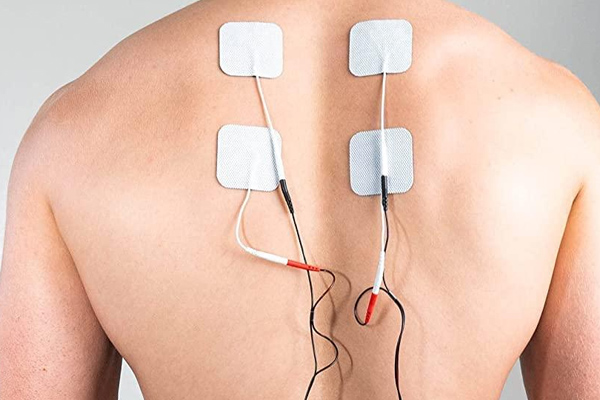
- Non-Invasive & Safe – No drugs or injections needed
- Immediate Pain Relief – Can be felt during and after sessions
- Reduces Muscle Spasm – Improves mobility and comfort
- Supports Rehabilitation – Enables safer participation in exercises
- Customizable – Frequency, intensity, and duration can be adjusted per patient
How Many Sessions Are Needed?
The number of sessions depends on your condition:
- Acute Pain : 3–5 sessions
- Chronic Pain : 8–12 sessions
- Post-Surgery / Injury : 10–15 sessions
At Spectrum Physio Centre, TENS is combined with manual therapy, exercise
therapy, and other modalities for faster and long-lasting recovery.
Who Should Avoid TENS Therapy?
TENS is generally safe, but should be avoided in:
- Patients with pacemakers or implanted electronic devices
- Over the chest or heart region
- Over broken or infected skin
- During pregnancy (abdomen or lower back without medical advice)
- Areas with sensory loss
Why Choose Spectrum Physio for TENS Therapy?
- Certified physiotherapists with extensive experience
- Customized treatment based on your condition
- Used in combination with exercises and manual therapy
- Pain relief without medication
- Safe and comfortable sessions
Conclusion
TENS therapy is a powerful tool for pain management, helping patients
regain function, reduce muscle spasm, and improve quality of life. When
combined with physiotherapy exercises and manual therapy at Spectrum
Physio Centre, TENS provides safe, effective, and long-lasting relief for
acute and chronic pain conditions.